
Africa: Church And Development
"Speak for those who cannot speak for themselves, for the rights of all who are destitute. Speak up and judge fairly; defend the rights of the poor and needy" (Prov.31: 8, 9).
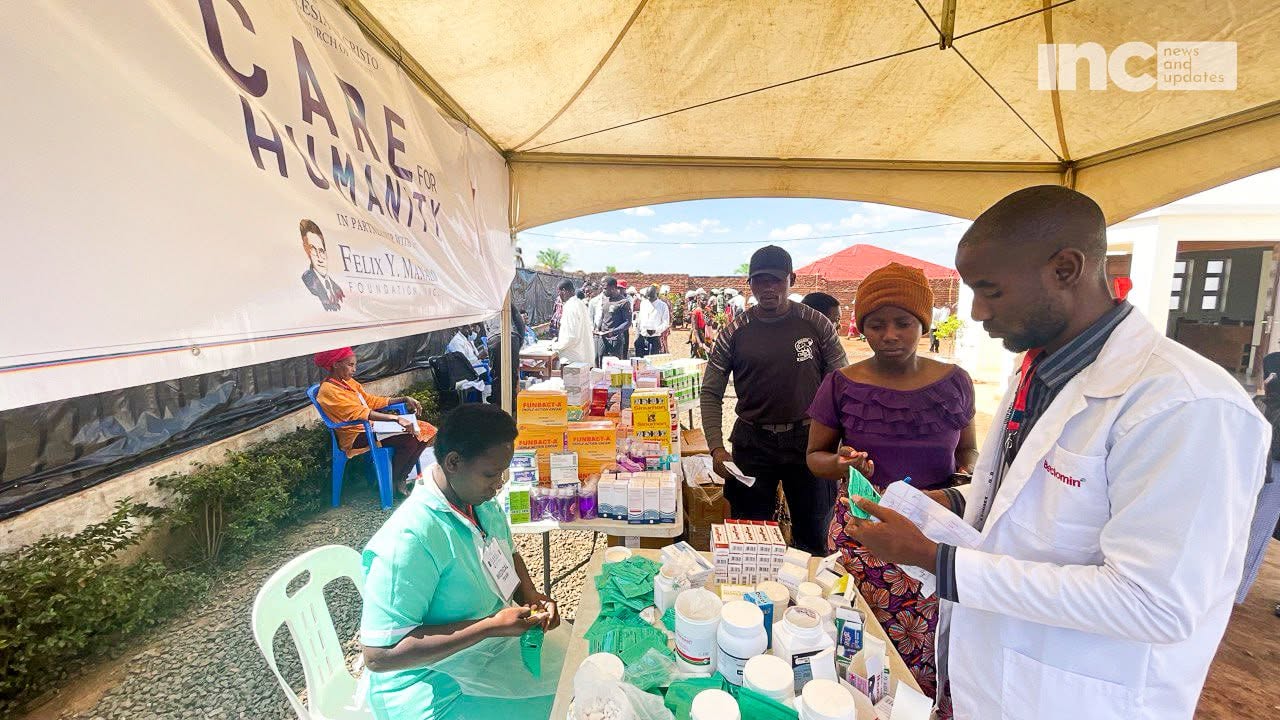
(Reformed Reflection)
AFRICA: Church and Development.
"Speak for those who cannot speak for themselves, for the rights of all who are destitute. Speak up and judge fairly; defend the rights of the poor and needy" (Prov.31: 8, 9).
The faces of the destitute adults in Africa's urban slums, the farmers without a harvest because of drought, the poor widows and widowers, poor aged people, internally displaced persons, helpless sick people, and the starving children should move the affluent church to action. What can be done for these people? There are no ready-made solutions for all the problems in Africa. It is impossible to remove all injustice, all poverty and all form of oppression from our imperfect and sinful world. In the light of the massive challenge Africa presents, we may even be tempted to ask whether or not we are fighting a lost battle in our effort to improve the lot of the poor African. But for Christians there are no "lost battles." We are mandated to erect signs of hope in a broken world. The good news of the Gospel is not only for the life to come but also for this life. It has a message for the poor, for those in prison, and for those who are suffering oppression. In obedience to the Lord's Great Commission, the Church proclaims the Gospel in word and in deed. The demands of righteousness are upon us. By the grace of God, who sent His only begotten Son into this world, and moved by the love of Christ, who emptied Himself for our sake, Christians can make a difference.
" For Christians, life is fulfilled in productively caring, not in consuming. Consumption is not the basis of our existence. Furthermore, "It is more blessed to give than to receive" (Acts 20: 35). Only true renewal comes through a spiritual rebirth (John 3: 1-9). Rebirth as a spiritual reality implies and involves death to the old order and resurrection to a new life in Christ (Rom. 6). Because they are in Christ, Christians should work hard on a distinctly Christian approach to development. They must break out of the subservience to the secularist agenda of the United Nations and the World Bank. They must develop their own agenda, founded in the Gospel, as an alternative framework in which the issues of our day can be addressed. Christian beliefs that should be taken into account are, amongst others, the belief that God's comprehensive salvation, as realized in His Kingdom, is the goal of development. It is only with the all-embracing Gospel that the challenge of today's dominant secular ideology can be met. The supporting beliefs of secular aid agencies are incompatible with the values of the Gospel. If development work is no more than meeting this world's need only, it will enslave rather than liberate. Scripture is very explicit that genuine freedom is not fulfilled in self-gratification but in the service of love: "...do not use your freedom as an opportunity for self-indulgence, but through love become slaves to another" (Gal. 5:13).
A Christian approach treats people as image bearers of God (Gen. 1: 27; Ps.8). It calls for human contact, creates an atmosphere of mutual acceptance, respect and good will. It enters the small world of people with almost no public profile, the micro-world with less publicity and closer to the grassroots. In other words, church and development plans need to focus on improving people's lives directly and not the beauty of a building or improving communication techniques as the case is today. In secular development thinking, modern technology has become too powerful, impersonal, with little respect for human values and the simplicity of the villagers and traditional cultures. The poorest of the poor are talked about as a prime target for development. In this way, the poor become objects of charity, separated, isolated and stigmatized as a separate group or class.
Development is a process. It involves an understanding of the African's view of reality. In this brief article, one can only point to some basic beliefs that are shared by most Africans. For the Africans the invisible (Spiritual) world is as real as the visible (Material); behind the visible lies the invisible, behind the material lies the spiritual, behind the living lies the dead or the living-dead. In practical terms it means that the African's commitment to their family in its extended form involves both the living and their ancestors.
Africans are people-centered. Even the gods exist for the welfare of man. The fame of a chief, for example, is reflected in the number of people who either live on his largeness or support him and not in his mansion. The Yoruba (Nigeria) express this concept proverbially: "All I care for as I look at my surrounding are people; they are my clothes." This does not only promote loving concern and care for people but also serves as an antidote for materialism. Time conscious Westerners may find it frustrating, but for Africans, people matter more than things or time. Generally speaking, time in the traditional African worldview is event-oriented and not measured. Time is made for man and not vice versa.
In Africa, freedom and rights are only realized in the context of the community. Hence, the importance of development through and with the community. A popular expression which adequately depicts African sense of community life is: "I am because we are." An African is being in community. He is part of the organic whole. While the extended family system may baffle the West, Africans in turn, find it difficult to make sense of Western individualism. They have great respect for old age. Unlike the West where old-age is dreaded, in Africa, it is almost a virtue. Elders are not only respected, in some instances, they are revered. Such practices as calling older folks, by name or even shaking hands with elders, as is commonly done today would be considered anathema in the traditional society.
Africans have a holistic approach to reality. To an African, religion is not privatized; it undergirds and permeates all of life. Every action or reaction, event or incidence is given a religious interpretation. This holistic approach to reality also implies dynamic holistic treatment of people's needs. A Zulu proverb says: "What is good for the soul is good for the body." This belief offers a great point of contact for Reformed Christians, who stress a holistic ministry. one argues, therefore, that development should be a ministry of the church community. As the universal Body of Christ, the Church is a racial and spiritual unity. Our Lord called His Church to represent Him and to bring honor to Him. His church is in the world and for the world. Since the Church is one, there is mutuality in decision making.
The local churches in Africa can play a strategic role in promoting a new development agenda that promotes the well-being of their communities. They have this opportunity, because of all social institutions of modern Africa, they are unrivalled in their access to their communities. Development is then no longer something that is happening in general, working with programs dictated by secular agencies, but something specific and local. The small people, the poor and downtrodden, become part of it. They take ownership of a proposed project because they conceived it and carried it out.
BEAM Reader List
Keep the useful stories close.
Weekly edit of leadership profiles, campus enterprise, and public service coverage — no spam.